
SPX Power Team Hydraulic Pump Manual: A Comprehensive Guide
SPX Power Team delivers robust hydraulic solutions, encompassing pumps, cylinders, and tools for professional use. This manual details operation, maintenance, and safety for Power Team’s electric/hydraulic pumps, offering reliable performance across diverse industrial applications.
SPX Power Team has established itself as a leading force in hydraulic technology, boasting over 85 years of experience in delivering professional-grade hydraulic solutions. Their extensive product line includes high-pressure hydraulic pumps, cylinders, jacks, pullers, and specialized tools, catering to a broad spectrum of industrial needs. These pumps are renowned for their durability, reliability, and consistent performance, making them a preferred choice for demanding applications.
This introduction serves as a foundational overview for understanding SPX Power Team hydraulic pumps. Whether you’re dealing with single-acting or two-speed models, foundation pumps like the PE552, or standard electric portable pumps such as the PE554, this guide will provide essential insights. The pumps utilize hydraulic gear pump technology, often operating on a 110-volt power source, and are designed for applications requiring pressures of 1000 psi and above, extending up to 690 bar (10,000 psi) in the 10 Series.
Understanding Hydraulic Pump Types
SPX Power Team hydraulic pumps encompass a variety of types, each engineered for specific applications and performance requirements. A core distinction lies between single-acting and two-speed models. Single-acting pumps deliver hydraulic fluid in one direction, ideal for simpler lifting or pressing tasks, while two-speed models offer versatility with faster cylinder extension for increased efficiency.

Furthermore, SPX Power Team utilizes hydraulic gear pump technology, a robust and reliable method for generating hydraulic pressure. These pumps are categorized by their capacity and pressure ratings. Foundation pumps, like the PE552, provide a stable base for consistent operation, while portable pumps, such as the PE554, offer flexibility for on-site use. The 10 Series pumps represent high-pressure capabilities, reaching up to 690 bar (10,000 psi), suitable for heavy-duty industrial applications. Understanding these distinctions is crucial for selecting the appropriate pump for your specific needs, considering factors like flow rate (e.g., 164 cc/min / 10 cu. in/min) and power source (typically 110 Volt).
SPX Power Team Pump Models: An Overview
SPX Power Team offers a diverse portfolio of hydraulic pumps, catering to a wide spectrum of industrial demands. Key models include the PE552 Foundation Pump, renowned for its stability and consistent performance, and the PE554 Standard Electric Portable Pump, prized for its versatility and ease of transport. Both models exemplify Power Team’s commitment to professional-grade hydraulic solutions.
Beyond these foundational models, SPX Power Team provides two-speed pumps, enhancing operational efficiency with faster cylinder extension. The 10 Series pumps stand out with their high-pressure capabilities, reaching 690 bar (10,000 psi), ideal for demanding applications. Electric motor specifications range from 1/4 hp upwards, influencing pump power and flow rate. These pumps commonly feature a 3/8 in outlet port diameter and are rated for pressures of 1000 psi and above. Many models incorporate a convenient two-button hand remote for precise control, operating on a standard 110 Volt power source. Choosing the right model depends on specific application requirements and desired performance characteristics.
PE552 Foundation Pump: Features and Specifications
The SPX Power Team PE552 Foundation Pump is a cornerstone of reliable hydraulic power, designed for stationary applications demanding consistent performance. This electric/hydraulic pump delivers a robust solution for tasks requiring sustained pressure and controlled operation. It’s built with a durable construction, ensuring longevity even in challenging industrial environments.
Key features include a powerful electric motor, typically operating on 110 Volt power, and a single-acting pump action. The PE552 utilizes hydraulic gear pump technology for efficient fluid transfer. While specific flow rates vary, it’s engineered to provide ample hydraulic force for a range of cylinders and tools. The outlet port diameter is commonly 3/8 inch, compatible with standard hydraulic fittings. Rated pressure capabilities generally exceed 1000 psi, suitable for diverse applications. The PE552 often incorporates a two-button hand remote for convenient and precise control, enhancing operator safety and efficiency. It’s a dependable choice for professionals seeking a stable and powerful hydraulic pumping solution.
PE554 Standard Electric Portable Pump: Details
The SPX Power Team PE554 Standard Electric Portable Pump offers a versatile and convenient hydraulic power source for a wide array of applications. Designed for mobility, this pump allows users to bring hydraulic power directly to the work site, eliminating the need for lengthy hoses or fixed installations. It’s a popular choice for maintenance, repair, and operational tasks across various industries.
Like the PE552, the PE554 typically operates on a standard 110 Volt power supply and features a single-acting pump action utilizing hydraulic gear pump technology. It commonly includes a two-button hand remote for precise control during operation. The outlet port diameter is generally 3/8 inch, ensuring compatibility with common hydraulic accessories. While specific motor horsepower varies, models range from 1/4 hp upwards, providing sufficient power for numerous tasks. The PE554 is known for its quiet operation, enhancing workplace comfort. Its robust construction and portable design make it a reliable and efficient solution for professionals needing on-demand hydraulic power.
Two-Speed Models: Advantages and Applications
SPX Power Team’s two-speed electric/hydraulic pumps represent a significant advancement in efficiency and versatility. These models offer two distinct operating speeds: a slower, high-pressure speed for precise positioning and force application, and a faster, lower-pressure speed for rapid cylinder extension and retraction. This dual functionality dramatically reduces cycle times and increases overall productivity.
The primary advantage lies in the ability to quickly move loads into position, then fine-tune with controlled power. Applications benefiting from this capability are extensive, including industrial maintenance, heavy equipment repair, and manufacturing processes. Two-speed pumps are particularly valuable when dealing with large cylinders or applications requiring frequent adjustments. Electric motors powering these pumps range from 1/4 hp to larger capacities, providing ample power for demanding tasks. The two-speed feature minimizes operator fatigue and optimizes workflow, making them a preferred choice for professionals seeking enhanced control and efficiency in their hydraulic operations.

Electric Motor Specifications (1/4 hp to…)
SPX Power Team electric hydraulic pumps utilize a range of electric motors, typically spanning from 1/4 horsepower (hp) to more substantial capacities, depending on the pump model and intended application. These motors are designed for reliable performance and efficient conversion of electrical energy into hydraulic power. The selection of motor size is crucial, directly impacting the pump’s flow rate, pressure capabilities, and overall operational efficiency.
Lower horsepower motors (1/4 to 1/2 hp) are commonly found in portable and lighter-duty pumps, suitable for smaller cylinders and less demanding tasks. Higher horsepower motors (1 hp and above) are employed in heavier-duty pumps designed for larger cylinders, higher pressures, and continuous operation. All motors are built to withstand the rigors of industrial environments and are typically designed for 110-volt operation, ensuring compatibility with standard power outlets. Proper motor maintenance, including regular inspection and lubrication, is essential for maximizing lifespan and preventing operational issues.
10 Series Pumps: High-Pressure Capabilities (690 bar / 10,000 psi)
The SPX Power Team 10 Series hydraulic pumps are specifically engineered for applications demanding exceptionally high pressure. These pumps boast a maximum operating pressure of 690 bar, equivalent to 10,000 psi, making them ideal for challenging industrial tasks such as heavy lifting, structural repair, and demanding maintenance operations. This high-pressure capability allows for the use of smaller cylinders to achieve significant force, enhancing portability and maneuverability in confined spaces.
Despite their high-pressure output, the 10 Series pumps maintain a consistent flow rate of 164 cc/min (10 cu. in/min), ensuring efficient operation. Constructed with durable materials and precision-engineered components, these pumps deliver reliable performance even under extreme conditions. Regular maintenance, including fluid level checks and filter replacements, is crucial to sustaining optimal performance and extending the lifespan of these high-capacity hydraulic power units.
Flow Rate Considerations (164 cc/min / 10 cu. in/min)

Understanding the flow rate of your SPX Power Team hydraulic pump is critical for optimizing performance and selecting the appropriate pump for your application. The flow rate, measured in cubic centimeters per minute (cc/min) or cubic inches per minute (cu. in/min), dictates the speed at which hydraulic fluid is delivered to the cylinder, directly impacting the cylinder’s extension and retraction speed. Many Power Team pumps, including those in the 10 Series, offer a flow rate of 164 cc/min (10 cu. in/min).
A higher flow rate generally translates to faster cycle times, but it’s essential to consider the cylinder’s displacement. Matching the pump’s flow rate to the cylinder’s requirements ensures efficient operation and prevents overheating. Factors like hose length and diameter can also influence the effective flow rate. Proper selection and maintenance contribute to maximizing the pump’s efficiency and ensuring reliable performance across various industrial applications.
Power Source: 110 Volt Operation
SPX Power Team electric hydraulic pumps are commonly designed for convenient operation with a standard 110-volt power supply. This widespread availability simplifies setup and eliminates the need for specialized electrical infrastructure in many industrial settings. The pumps are engineered to plug directly into typical North American electrical outlets, offering ease of use and portability; However, it’s crucial to verify that the power supply meets the pump’s specific electrical requirements, as outlined in the pump’s specifications.
Using the correct voltage is paramount for safe and efficient operation. Operating the pump with an incorrect voltage can lead to damage to the motor or other components, potentially voiding the warranty. Always ensure the power cord is in good condition and properly grounded. Furthermore, consider using a dedicated circuit to prevent overloading and ensure stable performance during demanding applications.
Pump Action: Single Acting Pumps

SPX Power Team frequently utilizes single-acting pump designs in their electric hydraulic pump series. A single-acting pump delivers hydraulic fluid during one direction of the pump stroke – typically the extension of a cylinder. Retraction relies on an external force, such as the weight of the load or a spring return within the cylinder itself. This design simplifies the pump’s construction and operation, contributing to its reliability and cost-effectiveness.
Understanding single-acting operation is crucial for proper application. Because retraction isn’t powered by the pump, the load must be appropriately balanced or the cylinder must be designed with a return spring. This pump action is well-suited for applications where controlled extension is the primary requirement, and gravity or another force handles the retraction. Always consult the specific pump’s documentation to confirm its operating characteristics and ensure compatibility with your intended application.
Hydraulic Gear Pump Technology
SPX Power Team hydraulic pumps commonly employ gear pump technology, recognized for its simplicity, robustness, and cost-effectiveness. Gear pumps operate by utilizing two or more meshing gears rotating within a closely fitted housing. As the gears turn, they trap fluid between the gear teeth and the housing, transferring it from the inlet to the outlet. This positive displacement action ensures a consistent flow rate, independent of pressure fluctuations within the system.
The inherent design of gear pumps makes them tolerant of fluid contamination, though filtration remains essential for optimal performance and longevity. They are particularly well-suited for applications requiring moderate pressures and flow rates, making them ideal for many industrial hydraulic systems. Regular maintenance, including fluid changes and inspection of gear teeth, is vital to maintain efficiency and prevent premature wear. Understanding this technology aids in troubleshooting and maximizing the pump’s operational lifespan.
Outlet Port Diameter: Common Sizes (3/8 in)
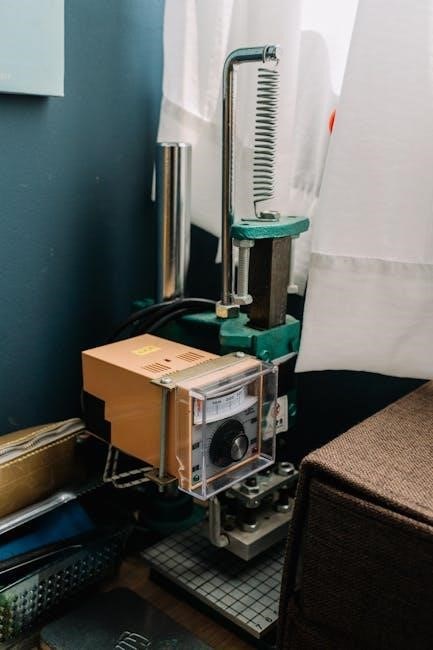
SPX Power Team hydraulic pumps feature various outlet port diameters to accommodate diverse hydraulic cylinder and system requirements. A frequently encountered standard is the 3/8 inch (in) outlet port, offering a balance between flow capacity and hose compatibility. This size is widely used in many portable and stationary pump models, facilitating connections to standard hydraulic fittings and hoses readily available in the market.
The selection of the appropriate outlet port diameter is crucial for optimal system performance. A correctly sized port minimizes pressure drop and ensures efficient fluid transfer. While 3/8 inch is common, other sizes may be available depending on the specific pump model and intended application. Always verify the pump’s specifications to confirm the correct port size before connecting any hoses or fittings. Using incorrect sizes can lead to reduced performance or even system damage.
Rated Pressure: Key Specifications (1000 psi and above)
SPX Power Team hydraulic pumps are engineered to deliver substantial hydraulic force, with rated pressures typically starting at 1000 psi and extending significantly higher. The 10 Series pumps, for instance, are capable of achieving a maximum pressure of 690 bar (10,000 psi), catering to demanding industrial applications requiring immense power. Understanding the rated pressure is paramount for safe and effective operation.
Exceeding the pump’s rated pressure can lead to catastrophic failure, posing a serious safety risk. Always ensure that the hydraulic cylinders, hoses, and fittings used in conjunction with the pump are also rated to handle the same or higher pressure. Regularly inspect all components for signs of wear or damage, and replace them promptly if necessary. Refer to the pump’s data plate and manual for precise pressure specifications and operating guidelines. Proper adherence to these specifications guarantees longevity and safe operation.
Hand Remote Operation: Two-Button Control
Many SPX Power Team electric hydraulic pumps feature convenient hand remote operation utilizing a two-button control system. This design allows for precise and safe control of the hydraulic cylinder’s movement from a distance, enhancing operator safety and accessibility, particularly in confined spaces or hazardous environments. One button typically controls cylinder extension, while the other manages retraction.
The hand remote is connected to the pump via a durable cable, ensuring reliable communication. Before operation, inspect the cable for any signs of damage, such as cuts or fraying, and replace it if necessary. During use, maintain a firm grip on the remote and avoid kinking or straining the cable. The two-button system provides intuitive control, but operators should always be aware of their surroundings and potential hazards. Familiarize yourself with the remote’s functionality before commencing any hydraulic operation.

Maintenance and Troubleshooting
Regular maintenance is crucial for ensuring the longevity and optimal performance of your SPX Power Team hydraulic pump. Periodically check the hydraulic fluid level and top up as needed, using only the recommended fluid type. Inspect hoses and fittings for leaks or damage, replacing them promptly if found. Clean the pump exterior regularly to prevent dirt and debris buildup.
Troubleshooting common issues can often resolve problems quickly. If the pump fails to operate, verify the power source and check the motor overload protector. For slow or erratic operation, inspect the hydraulic fluid for contamination or air bubbles. A lack of pressure may indicate a faulty relief valve or internal leak. Always disconnect the power supply before performing any maintenance or troubleshooting procedures. If you encounter a problem you cannot resolve, consult a qualified hydraulic technician or contact SPX Power Team customer support for assistance.
Safety Precautions for SPX Power Team Pumps
Operating SPX Power Team hydraulic pumps requires strict adherence to safety guidelines. Always wear appropriate personal protective equipment (PPE), including safety glasses and gloves, to prevent injury. Never exceed the pump’s rated pressure, as this can cause damage or failure. Ensure all connections are secure before operation to avoid hydraulic fluid leaks, which can pose a fire hazard.
Before performing any maintenance or repairs, always disconnect the power supply to prevent accidental activation. Never use the pump to lift or move loads that exceed its capacity. Be aware of pinch points and moving parts during operation. Regularly inspect the pump for any signs of damage or wear, and address them immediately. Proper training and understanding of hydraulic systems are essential for safe operation. Refer to the complete safety instructions provided in this manual and follow all applicable industry standards.
Applications in Industrial Settings
SPX Power Team hydraulic pumps are vital across numerous industrial sectors, providing reliable power for demanding tasks. In manufacturing, they facilitate the operation of hydraulic presses, bending machines, and injection molding equipment, ensuring precision and efficiency. Construction utilizes these pumps for powering heavy machinery like excavators and cranes, enabling lifting and moving of substantial loads.
Maintenance and repair operations benefit from their use in hydraulic jacks, pullers, and lifting devices. Automotive industries employ them for vehicle lifts, brake service, and frame straightening. Aerospace applications leverage their precision for aircraft maintenance and component testing. Furthermore, they are crucial in shipbuilding, steel mills, and various other heavy industrial processes where controlled force and reliable performance are paramount. Power Team pumps consistently deliver the power needed for critical operations.
Choosing the Right Pump for Your Needs

Selecting the appropriate SPX Power Team hydraulic pump requires careful consideration of your specific application demands. Assess the required pressure – Power Team offers models ranging from 1000 psi and above, including high-pressure 10 series pumps capable of 690 bar (10,000 psi). Determine the necessary flow rate; options include pumps delivering 164 cc/min (10 cu. in/min) or alternatives suited to faster cylinder extension with two-speed models.
Consider the power source availability – SPX Power Team pumps are commonly available for 110-volt operation. Evaluate whether a single-acting or two-speed pump best suits the task. Port diameter (commonly 3/8 in) should align with your hydraulic system. Finally, factor in portability needs; foundation pumps are stationary, while standard electric portable pumps offer flexibility. Matching these criteria ensures optimal performance and longevity of your hydraulic system.
SPX Power Team: A Legacy of Hydraulic Power
For over 85 years, SPX Power Team has established itself as a leading provider of professional-grade hydraulic equipment. Their commitment to innovation and quality has resulted in a comprehensive range of hydraulic pumps, cylinders, jacks, pullers, and specialized tools trusted by industries worldwide. This long-standing reputation stems from a dedication to delivering reliable, high-performance solutions for demanding applications.

SPX Power Team’s expertise extends to both standard and custom hydraulic systems, catering to diverse needs. From foundation pumps like the PE552 to portable models such as the PE554, and high-pressure 10 series pumps, their product line is designed for durability and efficiency. The company continually invests in research and development, ensuring their products remain at the forefront of hydraulic technology, solidifying their legacy as a trusted partner in hydraulic power.
Resources and Further Information
For comprehensive support regarding your SPX Power Team hydraulic pump, several resources are readily available. Detailed product specifications, dimensional drawings, and performance data can be found on the official SPX Power Team website. This online platform also hosts downloadable catalogs and application guides to assist in selecting the optimal pump for your specific needs.
Additionally, a network of authorized SPX Power Team distributors provides local expertise, sales support, and repair services. Contacting a distributor ensures access to genuine parts and qualified technicians. For technical assistance, safety information, or to report any issues, SPX Power Team’s customer service team is available via phone or email. Remember to always refer to the official manual for detailed safety precautions and maintenance schedules, maximizing the lifespan and performance of your hydraulic pump.